Learn · Gochara foundations
Gochara in Jyotisha: a foundation before forecasts
Learn how transits are calculated, how they differ from interpretation, and what a responsible general Rashifal can and cannot claim.
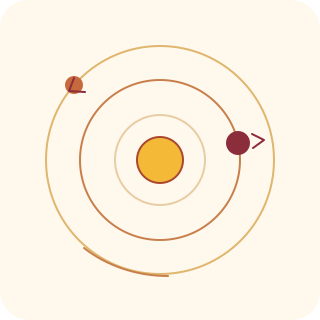
What gochara refers to
Gochara is the study of a graha’s movement through the zodiac in relation to a reference chart or point. A transit table can calculate a graha’s longitude at an instant and assign it to a nirayana Rashi using a stated ayanamsha. That is the reproducible coordinate layer.
An interpretation adds a tradition’s rules: for example, which natal reference is used, how aspects are counted, what other chart factors are considered, and how timing systems interact. These are not all settled by the longitude alone. Different Jyotisha lineages may use different rules; an educational article should name the one it describes rather than call it universal.
General Moon-sign coverage and personal charts
A general Rashifal on this site uses Janma Rashi—the Moon’s sidereal sign at birth—as its organizing reference, not a Western tropical Sun sign. That convention makes an article a broad editorial reading for a group, not a statement about every reader’s life.
A personal chart can include Lagna, planetary placements, dasha, and other factors. Kalika’s current chart tool calculates positions using an approximate Lahiri-style offset and mean nodes, but it does not produce a validated transit-and-dasha synthesis. We therefore do not label this guide or the event drafts as personal readings.
How to compare a transit date
Check the ephemeris, ayanamsha, geocentric or topocentric convention, mean or true lunar node, timezone, and rounding policy. A sign ingress is the crossing of a 30-degree boundary; the displayed local calendar date can differ if the crossing occurs near midnight. For stations and eclipses, the event definition and time standard must also be stated.
A minute difference between calendars is not automatically an error; it may come from the calculation method or rounding. A date discrepancy spanning days for Rahu and Ketu may reflect mean-node versus true-node calculations. Compare like with like before deciding that a chart or calendar is wrong.
How Kalika will handle event coverage
Each Featured event page should show its event date, timezone, source and calculation status. Astronomical facts, product conventions, traditional classifications, and editorial interpretation will be identified separately. A qualified reviewer must approve tradition-specific interpretation; a second calculation check is required for exact event times.
No transit guarantees a marriage, job, illness, loss, or other life event. We will not use fear or a costly remedy as a reason to act. If the evidence, calculation, or review is incomplete, the article will say so and remain outside authoritative forecast claims.